
There is something about a new season that makes you want to do something with your hair. The days are getting longer, the sun is shining, and you’re breaking out the summer wardrobe, ready to wear those colours and accessories that didn’t quite fit the dark of winter. It’s the perfect time to give your hair an upgrade, too. We have pulled together the cuts and colours that are resonating in Calgary right now. Browse the list to get inspired, or just to stay up-to-date with the latest trends. Hair is our favourite part of culture and fashion, and we want to share that with you. The Cuts The Textured Lob If there is one cut that keeps coming up in every conversation about what is working right now, it’s the lob. Short for long bob, it sits between the chin and the collarbone and manages to be simultaneously low-maintenance, versatile, and chic. What makes the 2026 version different from the blunt, polished lobs of a few years ago is texture. Stylists describe it as "mid-length, slightly undone, and effortlessly cool”. Soft internal layering gives it natural lift and a lived-in movement that works whether you air-dry it or reach for a diffuser. It slips under scarves and coats without losing its shape in winter, and dries quickly and easily in warmer months. The lob works across textures and face shapes, which is a big part of why it has become what multiple stylists are calling the haircut of 2026. If you have been on the fence about going shorter but are not ready to commit to something too short, the lob is the answer. The Modern Shag The shag is back, but not the heavily layered, overly styled version you might remember from decades past. The 2026 shag is softer, more controlled, and far more wearable, with blended layers, face-framing movement, and volume that doesn’t require too much effort to maintain. "Mussed-up texture is in this season," says celebrity hairstylist Chris Stenson. "A shag is great for anyone with thick hair because it removes weight and bulk. If you have finer hair, ask for a modern micro-shag or wolf-shag with strategic layering that adds volume and texture without making the hair look sparse." It’s an adaptable cut, good for thick hair that needs weight removed, and equally good for finer hair that needs help looking fuller. Pair it with curtain bangs for maximum impact, or keep the face-framing soft if you want something that is easy to grow out. (Source: Refinery29 ) The Boyfriend Bob For anyone who wants something shorter and more decisive, the boyfriend bob is having a real moment. Blunt, just below the jawline, and unapologetically cool, it’s the kind of cut that had to come from somewhere. The inspiration for the boyfriend bob is ‘90s heartthrobs like Leonardo DiCaprio in Titanic. The cut is minimalist yet bold, and effortlessly chic. It requires confidence, and it rewards it. If you’re ready to go shorter and show your personality in your haircut, this is one worth bringing to your consultation. Long Layers with Waterfall Waves For anyone not ready to give up their length, 2026 has something for you too. Celebrity hairstylist Dimitris Giannetos forecasts a major return to natural texture, with a focus on air-drying and minimal styling: looks that feel intentionally undone and relaxed, proving that effortless and elevated are not mutually exclusive. The waterfall cut is the cut making that possible: gentle, cascading layers that taper toward the centre of the back, creating a flowing effect that works especially well for waves and curls. Long hair with long layers is part of the quiet luxury hair trend right now, with celebrities like Jennifer Lopez and Amal Clooney leading the way. If you have been growing your hair out and wondering what to do with it, this could be your answer: keep the length, add shape, and let it move. (Source: Byrdie ) The Colours Lived-In Balayage Balayage is not new, but the way it is being done right now is worth paying attention to. The focus has shifted away from high contrast toward softer, more seamless blends: transitions that mimic the way hair naturally lightens in the sun, with no harsh lines and a finish that grows out gracefully. Classic blonde balayage remains one of the most requested services, but in 2026 it is all about a more natural finish. For brunettes, the golden brunette balayage is the version everyone is asking for: a rich brown base lifted with caramel, vanilla, and soft blonde highlights around the face for a warm, sun-kissed effect that is genuinely low-maintenance. The appeal is simple. You get dimension and brightness without the upkeep of a full colour service, and the grow-out looks deliberate rather than neglected. Glossy Brunettes Dark hair is having a moment, and it is a long overdue one. Rich brunette shades layered with subtle dimension, think molten brown, chestnut, cocoa, and maple tones, are catching the light. The key ingredient is a gloss treatment, which adds a reflective shine that makes dark hair look healthy, youthful, and alive. A gloss refresh is also one of the most underrated salon services for brunettes who are not ready for a full colour change but want their hair to look noticeably better. It takes less time than a colour service, the result is immediate, and it makes a real difference. Warm Copper and Caramel Tones Copper balayage is being called one of the most requested colour services of 2026, and it is not hard to see why. Warm amber and copper tones hand-painted through the mid-lengths and ends catch the light beautifully, grow out softly, and give hair a sun-lit glow that feels warm and alive. It is a particularly good colour story for Calgary, where warm tones complement the natural light across every season. Best suited to warm or neutral skin undertones, copper and caramel shades are flattering on a wide range of hair types and base colours. Bombshell Blonde: The Lived-In Version For clients who want to go lighter, the direction in 2026 is less platinum and more champagne. Soft gold meets cool beige, with pearly tones and warmth woven through: a bespoke, lived-in blonde that feels luxurious without the harshness of a flat, high-maintenance result. It is bright enough to make a statement and soft enough to be easily wearable. Pairing this kind of blonde with a regular gloss treatment between appointments is the key to keeping it looking healthy and purposeful rather than faded or brassy. What This Means for Your Next Appointment The thread running through all of these trends is the same: dimension over flatness, texture over polish, lived-in over rigid. Hair that looks like it belongs to you. That is a philosophy that fits naturally at Glissando Hair. Whether you come in knowing exactly which cut or colour you have been saving to your camera roll, or you arrive with nothing more than a feeling, a consultation will get you hair that feels like you, just with a new way to shine. Let’s get you ready to step into summer as the best version of yourself.
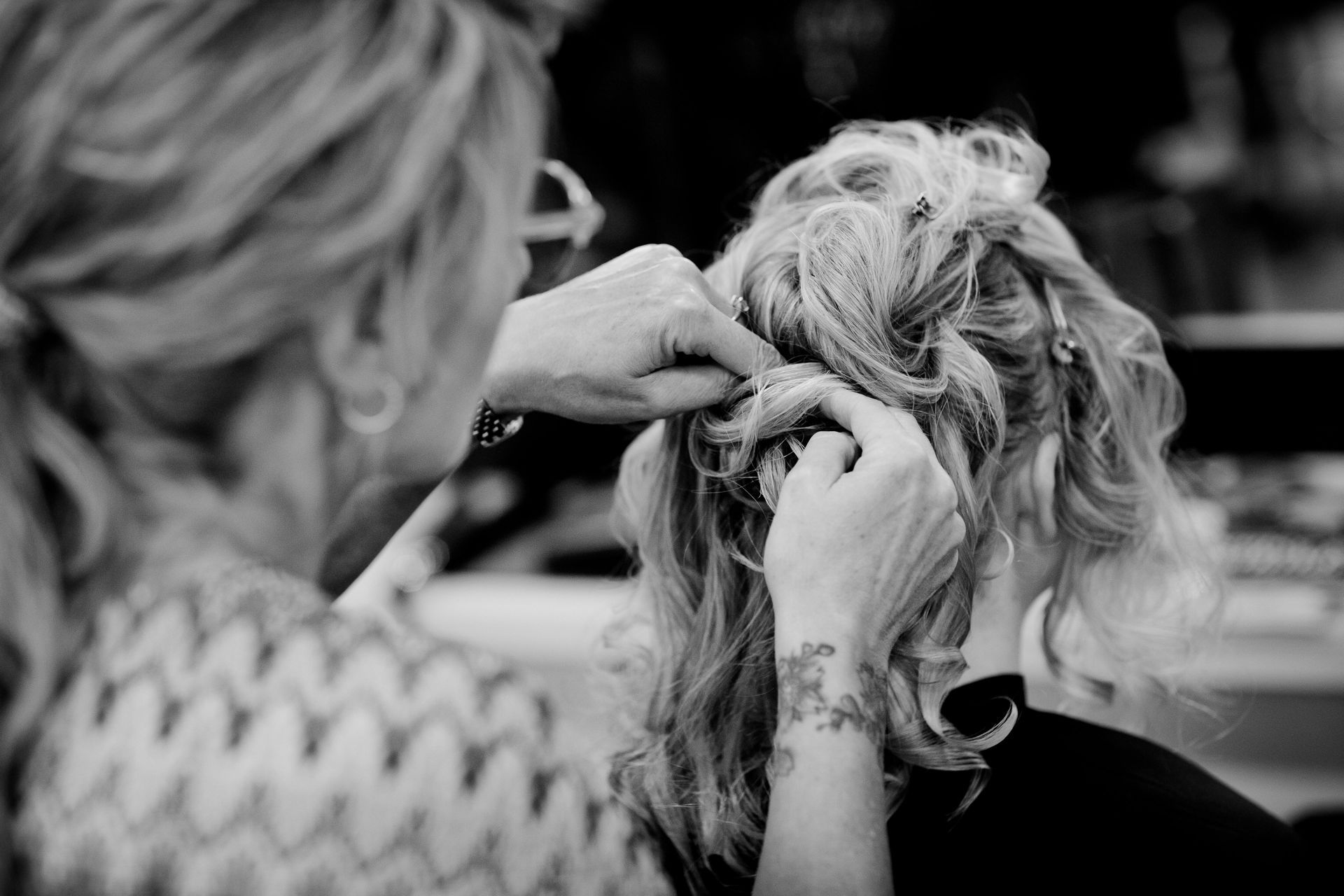
If you have curly hair, there is a good chance you have a story. A story of a time when you or someone else didn’t know how to properly style or cut your curls. Maybe when you used a straightener every day because that was just easier, or when someone brushed your hair and made it a frizzy mess, or a hair stylist that said she knew how to cut hair but clearly didn’t. Maybe you’ve even decided it’s just easier to take things into your own hands. You trim your own ends over the bathroom sink. You wave off the question of whether you want a cut at your colour appointments. You have decided that salons are simply not built for your hair, and you have made your peace with it. We hear this a lot. And we want to say something clearly: your curls are not the problem. What Most Stylists Were Never Taught Here is something the beauty industry does not talk about enough: curl-specific cutting and styling is a distinct skill set, and the majority of cosmetology training does not cover it in any meaningful depth. Most stylists learn to cut hair wet, straight, and with the assumption that it will be blown out or flat-ironed before anyone sees the final result. Curly hair does not work that way. When curl pattern, shrinkage, density, and porosity are not taken into account, the result is a haircut that looks perfectly reasonable on the salon chair and completely different by the time you get home and your hair does what it actually does. Curly hair needs a different approach. Curls need to be assessed in their natural state, understood in terms of how they move and where they spring back to, and shaped in a way that works with the texture rather than against it. A curly haircut takes longer, requires more observation, and demands a stylist who has spent real time learning how curl patterns behave, not just across one or two hair types, but across the full spectrum of wave, curl, and coil. That kind of expertise is rarer than it should be. But it exists, and you’ve found it with Glissando Hair. The Difference a Specialist Makes There is a particular feeling that comes with sitting in the chair of someone who actually knows your hair. Not just hair in general, but your hair. When a stylist takes the time to notice the way your curls cluster, where your shrinkage is most intense, and which sections need more length to fall properly. A curl specialist looks at your hair as something unique in order to bring out your hair’s natural beauty in a way that best fits you. The consultation is longer and more involved than you might be used to. There are questions: about your routine, your products, how you sleep, what you want your hair to do on a regular day versus a going-out day. And then the cut itself feels different too. Slower. More deliberate. Section by section, curl by curl, with your hair in its natural state so the stylist can see exactly what they are working with at every stage. The result is not just a haircut that looks good in the salon. It is a haircut that still looks good three days later, two weeks later, on a humid day, on a dry day, when you have just diffused it, and when you have let it air dry on the couch. It is a cut that was made for your actual life, not for the version of your hair that only exists under controlled conditions. What to Expect at Glissando Hair At Glissando Hair, curly hair is not a specialty in the sense of being something unusual or difficult. It is simply something we understand well and care about deeply. When you come in for a curly haircut, you will start with a proper consultation. No rushing through it, no assumptions made before anyone has actually looked at your hair and listened to what you are after. If you have tried things that have not worked before, like cuts that went wrong, products that were recommended and did nothing, bring that with you. The cut itself will be done on your natural texture. You will not be asked to come in with your hair blown out or straightened. We want to see your curls as they are, because that is what we are working with. Pricing for a curly haircut starts at $127, which reflects both the time and the level of attention that goes into the service. If you are also interested in perming, either to add curl and texture to hair that does not have it naturally, or to enhance and define the curl pattern you already have, that is something we offer as well. A perm in the hands of someone who understands curl structure is a very different experience from what the word might conjure. It is not about achieving a rigid, uniform curl. It is about creating movement and texture that feels like yours. You Do Not Have to Keep Settling If you have spent years working around your hair instead of with it, the idea of trying again might feel like a lot. That is completely understandable. But you also do not have to commit to anything right away. A consultation is a conversation. It is a chance to ask questions, talk about what has and has not worked, and get a clear sense of what is possible before any scissors come out. Your curls are worth getting right. And the right hands make all the difference. Ready to give it another try? Book a consultation at Glissando Hair online through Vagaro. We would love to meet your hair.
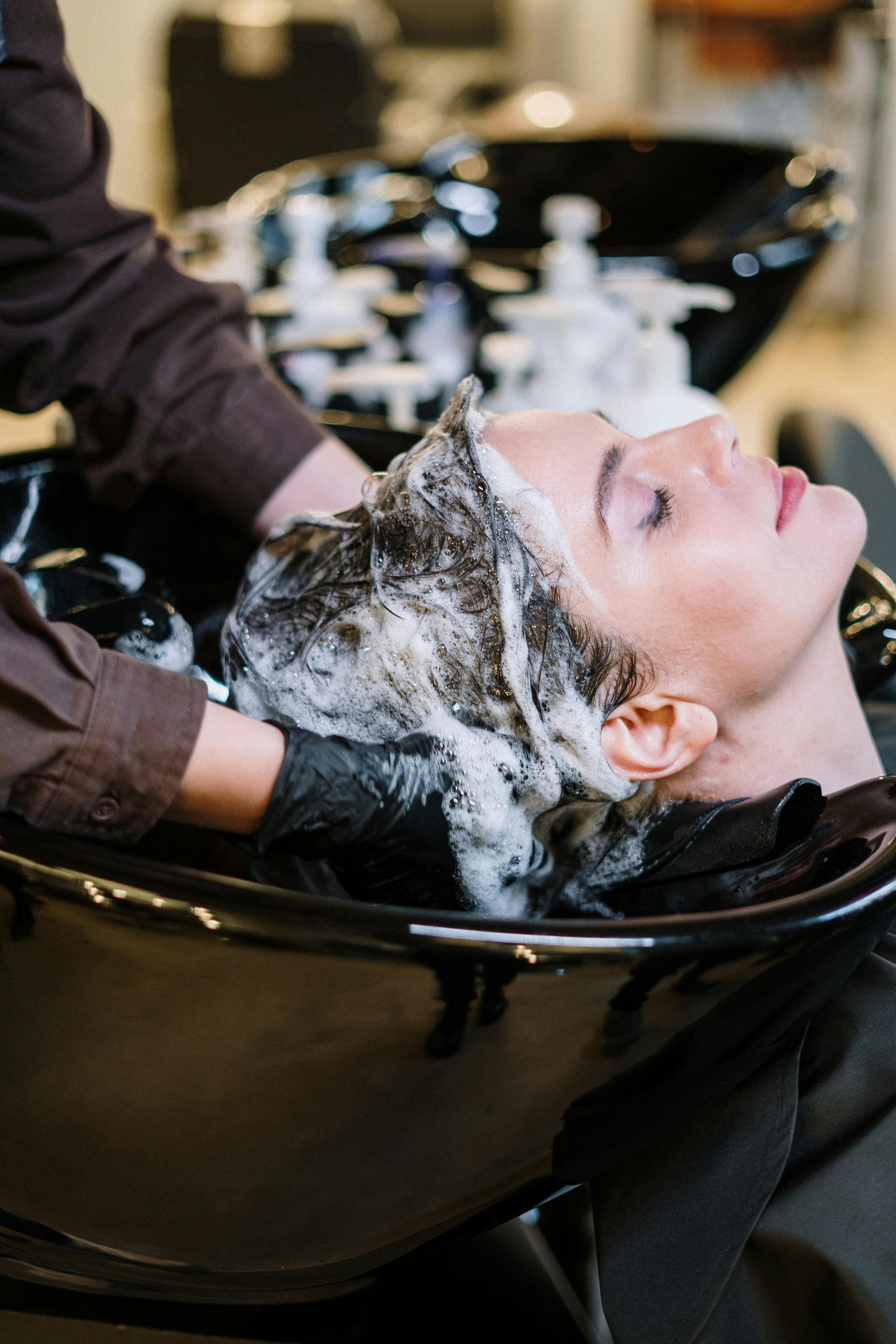
There is a particular kind of quiet that settles over you when someone else washes your hair. The warm water, the steady pressure of fingertips against your scalp, the fact that for a few minutes you are not expected to do anything at all. You are not answering messages. You are not running through tomorrow's to-do list. You are just there, eyes closed, shoulders finally dropping away from your ears. It is a small thing. And it is everything. We live in a culture that has a complicated relationship with rest. We are quick to justify the things we do for ourselves when they are productive: the gym because it makes us more energetic, the meditation app because it makes us more focused, the healthy meal because it makes us more functional. We are less practised at doing things simply because they feel good. The salon visit has long been filed under "treat" or "luxury" or "something to do when there's something to celebrate." But that framing undersells what actually happens when you walk through the door and hand someone else the job of looking after you for a little while. Time For You Matters It’s time to stop thinking of spending time on yourself as an indulgence. Instead, think of it as a boundary you draw between the version of you that gives and gives and gives, and the version of you that gets to receive something. When you book a salon appointment, you are carving out time that belongs entirely to you. Nobody can ask you to multitask or fill it with other chores or tasks. When it feels hard to take time just for yourself, that’s the point at which it’s even more important to do so. The salon is somewhere that someone takes care of you, and that’s nothing to be guilty about. You’ll be even more ready to return to your busy life with extra zest and energy after carving out some time for yourself. The Body Keeps Score, and So Does Your Hair Stress shows up in the body in ways we don't always notice at first. Take a deep breath, drop your shoulders, and release your jaw. Did you feel a difference? Stress also shows up in your hair. Dullness, dryness, breakage : these are not just cosmetic concerns, but often the physical record of a period when you were running on empty and your body redirected its resources away from the things that could wait. Coming to the salon is, in a small but meaningful way, a signal to your nervous system that things are okay enough now to tend to yourself again. Let the salon take your stress away, at least for a few moments, as you sit in the chair and let someone else take care of you. Your hair and your body will thank you. The Ritual Matters as Much as the Result We talk a lot about the haircut. The colour. The transformation. And those things matter, of course. You walking out with hair you love is the result we do our best to deliver with every appointment. But the ritual of the appointment itself is important, too. The drive over, when you have given yourself permission to be somewhere that is just for you. The moment you sit down and someone drapes a cape around your shoulders and asks how you’ve been. The consultation, where someone looks at you and really listens, wanting to understand exactly what’s going to work for you. The wash. The quiet. The way time moves differently when you are not the one managing it. These are not filler moments between the important parts. They are the important parts. The result, the haircut, the colour: this is what you take home. The ritual is what restores you while you are there. A Comfortable Space Is Not a Small Thing Not every space makes you feel safe. Some salons feel transactional: you come in, you get the service, you leave. There is nothing wrong with efficiency, but efficiency alone does not give you what you actually came for. A salon that feels like a sanctuary is a different experience entirely. It is the difference between being processed and being seen. Between leaving with your hair done and leaving feeling like yourself again. At Glissando Hair, that is the intention behind everything. The atmosphere is warm and unhurried by design. There is no pressure, no judgment, no sense that you are taking up too much time or asking for too much. You are allowed to know exactly what you want, or to have no idea at all. You are allowed to talk the whole way through, or to sit in comfortable quiet. You are allowed to just be there, and let someone else take it from here for a while. We don’t see care as a luxury, but the main thing a good salon is for. You Do Not Need a Reason You do not need to have a special occasion. You do not need to wait until your hair is at a crisis point. You do not need to justify it to anyone, including yourself. The salon visit is self-care not because of what it produces, but because of what it asks of you: nothing. For a little while, nothing at all. And when you leave, with hair you love and shoulders that have finally, finally unclenched, you will remember why you should have done this sooner.